
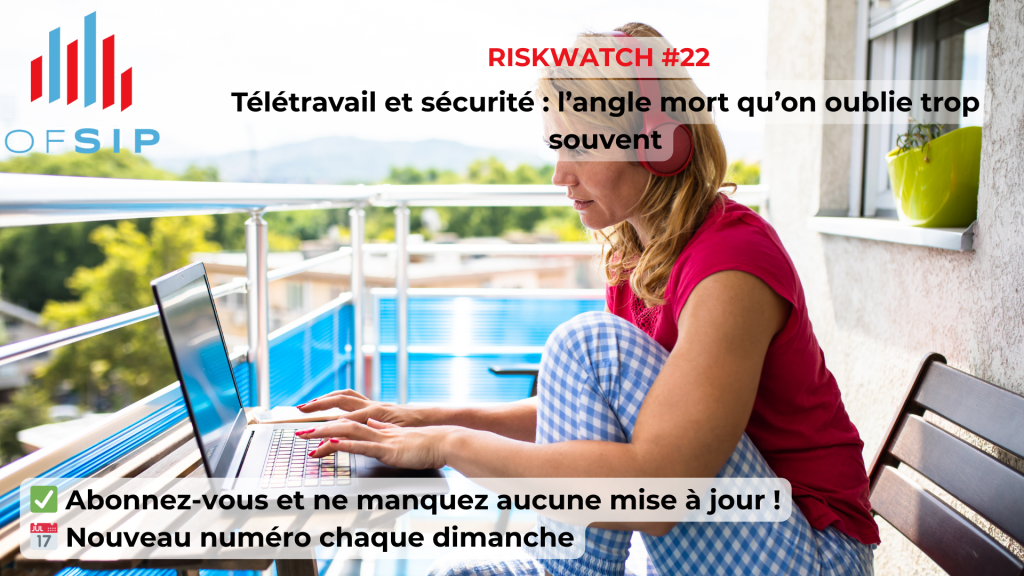
The widespread adoption of remote working since the health crisis has profoundly transformed the way we operate. For many, working from their living room, bedroom, or kitchen table offers appreciated flexibility, saves time, and allows for better work-life balance. However, in this new workspace, employee safety and well-being do not always receive the attention they deserve. Too often, it is assumed that working “at home” falls outside of usual prevention rules, yet it is becoming urgent to address this.
Au Luxembourg, le télétravail est encadré par l’National agreement of 20 October 2020, as extended by a grand-ducal regulation signed in 2021. This agreement institutionalises remote working by providing it with a clear legal framework, including in cases of regular remote working. Contrary to popular belief, this does not release the employer from their health and safety obligations. According to Article L.312-1 of the Labour Code, the employer must take «all necessary measures to ensure the safety and protect the physical and mental health of workers», wherever the workplace, including at home.
Even the DUERP (Unique Professional Risk Assessment Document) It must incorporate the risks associated with remote working: musculoskeletal disorders, isolation, stress, unsuitable equipment… This document must evolve with the organisation of work, not just during quarterly audits.
Statistics
- Eurofound Remote workers have seen their weekly working hours increase: whereas an office-based employee generally works between 36 and 40 hours, remote workers can exceed 46 hours some weeks. .
- A March 2024 survey of 383 remote workers reveals that they exhibit significantly higher occupational risks visual fatigue (OR = 3.18), musculoskeletal pain (OR = 1.58) and mental distress (OR = 1.67), compared to a control group.
- Several scientific reviews, particularly in 2025, confirm that inadequate working environments at home, The improvised furniture and awkward postures are directly linked to an increase in musculoskeletal disorders.
These figures are not anecdotal; they reflect a concrete and worrying reality.
The institutions like’INRS, EU-OSHA, and national agencies today recommend clearly integrating teleworking into prevention policies, with:
- One Systematic evaluation of home placement (ergonomics and psychosocial risks)
- des specific formations (time management, active breaks, posture)
- One acceleration of the development of charters or addendums to the contract to formalise the commitments of each party
- increased vigilance over The «invisible surcharge» What does prolonged work or the inability to disconnect represent.
At OFSIP, we consider that The teleworking space is a full-fledged position.. Here is what is specifically recommended:
- Diagnose each remote workstation via an ergonomic self-assessment grid.
- To train employees position the screen at eye level, adjust the seat, take regular breaks, enable disconnect.
- Raise managers' awareness to the subtle signs: fatigue, irritability, decreased involvement, increased connection time.
- Provide an ergonomic kit (screen support, footrest, separate mouse...) or financial assistance to set it up.
- Bring the DUERP to life and including the risks of the domicile and reassessing it every six months.
Leverage for effective action
- The advent of remote working agreements which clarify each person's responsibilities, the equipment, the permitted period, etc.
- The digital tools interactive checklists, self-assessment questionnaires, accessible ergonomic guidance.
- Internal communication regular workshops, anonymous feedback, sharing of best practices.
- The HR / H&S implication to make remote working a genuine health and safety issue, not just a logistical one.
Brake release
The brakes are mainly cultural: the perception that “the home is private, therefore out of scope”, the fear of disturbing others, the lack of budget for equipment, the legal complexity (particularly for cross-border workers, between remote working and social legislation), as well as the lack of training for managers to detect warning signs.
Stakeholders to involve
- Employer / Management committee to establish a clear policy, budget resources.
- Designated Worker / Health and Safety Representative Integrate remote working into the Single Document for the Prevention of Occupational Risks, follow up on initiatives.
- Occupational Health & Safety Doctors former, accompany, propose.
- First-line managers To monitor, relay, communicate.
- Remote workers themselves to be active, responsible, vigilant.
In conclusion
Remote working is a development that holds much promise: flexibility, autonomy, and work-life balance. But this spatial separation should not be a separation in terms of security. The home becomes a real place of work, with its own risks, its own routines, and its own vulnerabilities. Not including them in the prevention policy means exposing yourself to human, organisational, and legal costs.
OFSIP supports you in making remote working a secure investment, for both the employee and the company: because security doesn't stop at the office door.
 Français
  English (UK)
  Luxembourgish
  Deutsch